
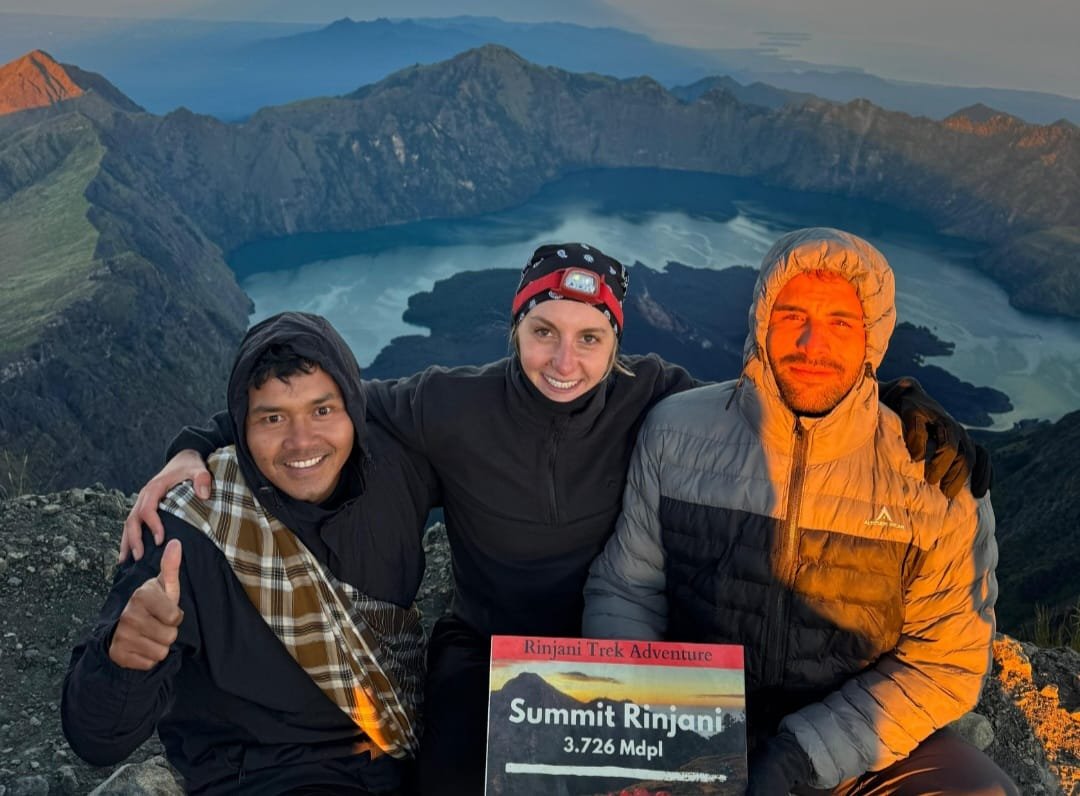
Trekking Mount Rinjani, Indonesia’s second-highest volcano at 3,726 meters, is a physically demanding adventure that comes with inherent high-altitude risks. Following a series of mountain incidents and historically slow ground rescue times, the Mount Rinjani National Park Authority (TNGR) introduced strict new safety and insurance regulations.
As of March 2026, when the e-Rinjani digital permit system reopened for the trekking season, carrying valid insurance that covers helicopter evacuation is officially mandatory for all trekkers.
Here is a detailed breakdown of the 2026 insurance framework, how the tier system works, and what you need to provide before you can legally begin your ascent.
To manage risk and improve emergency response, TNGR now enforces a two-tier insurance system integrated directly into the e-Rinjani ticketing process.
Every official e-Rinjani permit automatically includes a small basic insurance premium (approximately IDR 10,000). This is designed as a minimum baseline of protection.
What it covers: Basic medical treatment (up to IDR 20,000,000), manual ground-based evacuation, and limited compensation for death or permanent disability.
The limitation: It strictly excludes helicopter or air evacuation. Ground evacuation from difficult terrain, such as the crater rim or Segara Anak Lake, can take well over 12 hours and is insufficient for severe medical emergencies.
To bridge the gap in rapid emergency response, the park introduced the local Premium Insurance tier. This costs IDR 290,000 (roughly USD $17–$18) per person and is valid for a maximum of 4 days on the mountain.
Who must buy it: Any trekker (particularly foreign nationals) whose personal travel insurance does not explicitly cover high-altitude trekking and air evacuation.
What it covers: Comprehensive accident protection, ground evacuation, and most importantly, helicopter evacuation with a hoist.
| Benefit | Basic/Regular Insurance | Premium TNGR Insurance |
|---|---|---|
| Cost | Included in permit (~IDR 10,000) | IDR 290,000 per trek |
| Medical Treatment | Up to IDR 20,000,000 | Up to IDR 20,000,000 |
| Ground Evacuation | Up to IDR 15,000,000 | Up to IDR 15,000,000 |
| Helicopter Rescue | None | Up to IDR 260,000,000 (with hoist) |
| Accidental Death | Limited | IDR 300,000,000 |
You are not forced to buy the local TNGR Premium Insurance if you are already adequately covered. Most foreign travelers opt to use their own comprehensive travel insurance to waive the IDR 290,000 fee.
However, standard travel insurance often excludes high-risk activities. To qualify for the exemption, your policy documentation must explicitly state that it covers:
High-Altitude Trekking: Coverage for mountaineering activities up to at least 3,726 meters. (Note: Many standard policies cap coverage at 2,500m or 3,000m).
Air Evacuation: Explicit inclusion of emergency medical evacuation via helicopter or air rescue.
The Registration Process: You must provide your insurance provider’s name, your policy number, and proof of these specific coverages to your licensed trekking operator. They will input this data into the e-Rinjani system during the booking process. If you fail to produce this evidence at the basecamp briefing, you will be required to purchase the local Premium Insurance on the spot.
The addition of hoist-equipped helicopter evacuation is the cornerstone of the 2026 safety regulations. However, calling a helicopter is strictly regulated to prevent misuse.
If an incident occurs on the trail, the emergency protocol works as follows:
Initial Assessment: Your licensed guide will assess the situation and coordinate via radio with the TNGR command center.
Medical Declaration: A helicopter will only be dispatched if a certified medical doctor officially declares the situation a critical emergency.
Eligible Conditions: Air rescue is reserved for severe trauma and life-threatening conditions. Eligible injuries include broken bones, severe head injuries, acute hypothermia or frostbite, and loss of consciousness.
For minor injuries, exhaustion, or altitude sickness that is manageable without rapid extraction, ground evacuation via stretcher remains the standard procedure.
Proper preparation and ensuring your insurance meets these 2026 standards guarantees that if you experience a critical emergency in Rinjani’s remote volcanic terrain, you will have access to the immediate, high-level rescue services you need.
